
Gratitude for Awareness: The Good Things Guy

Gratitude for Awareness: The Good Things Guy

When a diagnosis is uncommon, there is often no roadmap, no local reference point, and very little public understanding of what families are facing day to day. That’s why awareness matters. 

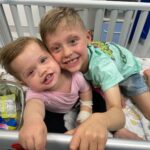
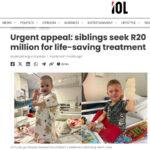
We want to extend our sincere thanks to Brent Lindeque and the team at Good Things Guy for sharing Jesse and Sadie’s story with such care and humanity.

You can read the article here:
https://www.goodthingsguy.com/people/siblings-rare-condition-south-africa/

Brent has a rare gift for telling stories that don’t sensationalise hardship or reduce families to headlines. Instead, he creates space for understanding and that matters deeply in a journey like this one.

DOCK8 immunodeficiency is not a condition most people have ever heard of. It doesn’t come with public campaigns, established local treatment pathways, or widespread recognition. Families facing it are often navigating complex medical decisions while simultaneously explaining, again and again, why a simple infection isn’t simple, and why “waiting it out” isn’t an option.

For donors and supporters, awareness builds context. It allows people to give not out of shock or pity, but out of understanding and trust. For families, awareness reduces isolation. It reminds us that even when the medical road is narrow and uncertain, we are not walking it unseen.

Thank you, Brent, for using your platform to amplify stories that matter and for doing so with integrity. To everyone who has read, shared, prayed, or reached out after seeing this article, thank you. Your kindness strengthens us more than you know.

When Common Viruses Become Dangerous: Life With DOCK8 and Severe Skin Disease

When Common Viruses Become Dangerous: Life With DOCK8 and Severe Skin Disease

One of the most visible and often misunderstood features of DOCK8 deficiency is severe viral skin disease. Among the most distressing examples is molluscum contagiosum, a virus that most healthy children clear easily.

For children with DOCK8, molluscum is not mild.

Molluscum contagiosum is caused by a poxvirus that infects the skin. In children with normal immune systems, it usually causes small, painless bumps that resolve over months. In children with DOCK8, the immune system cannot control the virus. Instead of clearing, the infection spreads, multiplies, and persists.

In Jesse and Sadie’s case, molluscum has been severe and widespread. Lesions can involve large areas of the body, including sensitive regions such as the face, eyelids, neck, and skin folds. Because the virus persists, lesions often become inflamed, infected with bacteria, painful, and slow to heal.

This is not a cosmetic issue. Severe molluscum in DOCK8 reflects deep immune dysfunction.

Chronic viral skin infections:

  • Create open portals for bacterial infection
  • Increase the need for repeated antibiotics
  • Cause scarring and long-term skin damage
  • Lead to significant physical discomfort
  • Have a profound emotional and social impact on children and families

Treatments that work in healthy children — topical therapies, freezing, curettage, are often ineffective or poorly tolerated in DOCK8 patients. Even when lesions are removed, new ones appear. The immune system simply cannot “finish the job.”

This same immune failure explains why other viral infections including herpes simplex, shingles, and HPV are often severe and persistent in DOCK8 patients. It also explains why doctors worry deeply about long-term cancer risk, as chronic viral infection and immune dysregulation are known contributors to malignancy.

For families, this means constant vigilance:

  • Strict skin care routines
  • Infection control measures
  • Frequent medical visits
  • Managing pain, itching, and secondary infections

Navigating the emotional toll of visible disease

When people see photographs or hear descriptions of severe molluscum, it can be shocking. But it is important to understand: this is not neglect, and it is not poor hygiene. It is the visible expression of a profoundly compromised immune system.

This is also why doctors view HSCT as urgent. Clearing molluscum and other viral infections is often one of the clearest signs of immune recovery after transplant because it means the body can finally do what it could not before.

  • Al-Herz et al. (DOCK8: persistent viral infections, immunology, HSCT cure). PMC

  • EBMT Handbook IEI chapter (infection susceptibility & transplant principles). NCBI

  • DOCK8 case literature reflecting severe viral disease and immune dysregulation (recent examples/case reports). Frontiers+1

Family Update #1

Family Update #1

Thank you for the incredible kindness, messages, and generosity we’ve received. Your support has carried us through an incredibly difficult time, and we’re deeply grateful to everyone who has donated or contributed in any way. Every gesture has made a real difference.

From the bottom of our hearts, thank you for standing with us. Thank you for every message, donation, and act of kindness. Your compassion gives us strength and hope every day.

The Krause family


Understanding DOCK8 Immunodeficiency: Why This Rare Diagnosis Is So Serious

Understanding DOCK8 Immunodeficiency: Why This Rare Diagnosis Is So Serious

When people hear that a child has a “rare immune condition,” it can sound distant or abstract. DOCK8 immunodeficiency is neither. It is a severe, inherited disorder of the immune system that fundamentally affects the body’s ability to protect itself from infection.

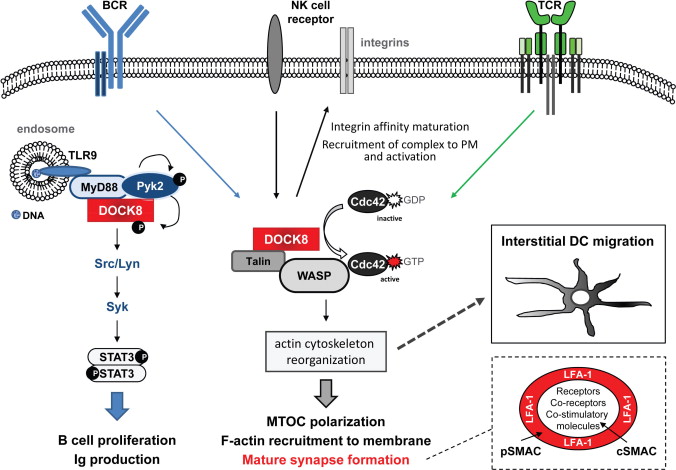
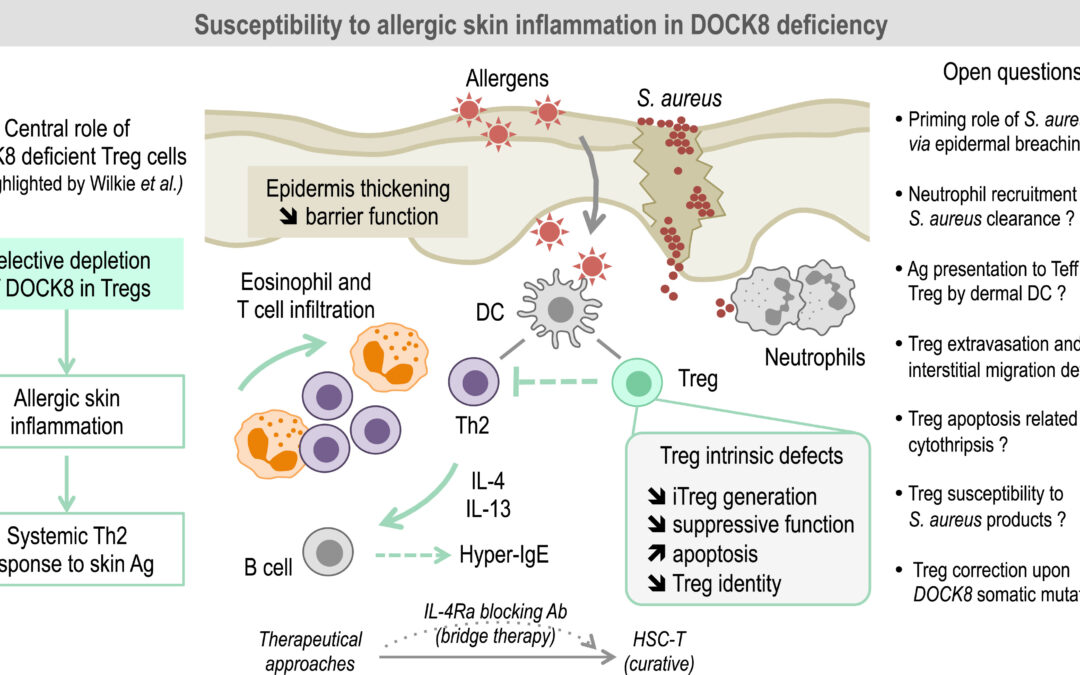
DOCK8 deficiency (Dedicator of Cytokinesis 8 deficiency) is a form of combined immunodeficiency. This means that multiple parts of the immune system including T cells, B cells, and natural killer (NK) cells, do not function properly. Children with DOCK8 are not simply “more prone” to infections; they are unable to clear many infections effectively, even with treatment.

The condition is caused by mutations in the DOCK8 gene, which plays a critical role in immune cell movement, survival, and communication. Without a functioning DOCK8 protein, immune cells struggle to migrate to infected tissue, mount coordinated responses, and maintain long-term protection. Over time, this leads to chronic infections, immune exhaustion, and progressive organ damage.

What makes DOCK8 particularly dangerous is that it does not improve with age. In fact, the opposite is true. As children grow older, repeated infections accumulate damage, especially to the lungs and skin, and the immune system becomes increasingly dysregulated.

Children with DOCK8 are especially vulnerable to:

  • Severe viral infections (including herpes viruses, HPV, molluscum contagiosum)
  • Recurrent bacterial infections
  • Chronic fungal infections
  • Allergic disease and asthma
  • Increased risk of malignancy at a young age

Without definitive treatment, long-term outcomes are poor. Published studies show that many untreated individuals with DOCK8 do not survive into adulthood, often due to overwhelming infection, lung failure, or cancer.

This is why doctors caring for children with DOCK8 do not frame treatment in terms of “management alone.” Supportive care can reduce symptoms and slow damage, but it cannot correct the underlying immune defect.

At present, the only curative treatment for DOCK8 deficiency is haematopoietic stem cell transplantation (HSCT) — commonly referred to as a bone marrow or stem cell transplant. HSCT works by replacing the faulty immune system with one capable of normal immune function.

Understanding DOCK8 means understanding urgency (not panic), but seriousness. It is a diagnosis that requires expert care, long-term planning, and, ultimately, decisive treatment if a child is to have a future not defined by illness.


  • EBMT Handbook (Inborn Errors of Immunity chapter; overview of HSCT as curative for IEI). NCBI

  • Al-Herz et al. “Hematopoietic Stem Cell Transplantation Outcomes…” (DOCK8 deficiency features + HSCT as only curative option; open access via PMC). PMC

  • EBMT/ESID Guidelines for HSCT in Inborn Errors of Immunity (2021). EBMT+1

  • Emerging spectrum / clinical challenges review (context on phenotype and HSCT). Springer