When people hear that a child has a “rare immune condition,” it can sound distant or abstract. DOCK8 immunodeficiency is neither. It is a severe, inherited disorder of the immune system that fundamentally affects the body’s ability to protect itself from infection.
DOCK8 deficiency (Dedicator of Cytokinesis 8 deficiency) is a form of combined immunodeficiency. This means that multiple parts of the immune system including T cells, B cells, and natural killer (NK) cells, do not function properly. Children with DOCK8 are not simply “more prone” to infections; they are unable to clear many infections effectively, even with treatment.
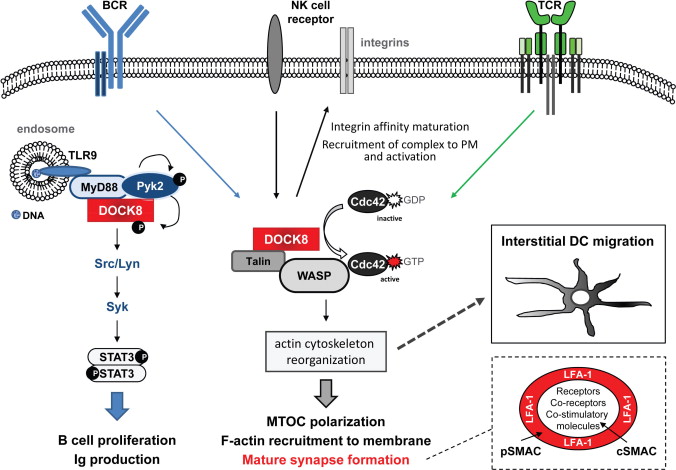
The condition is caused by mutations in the DOCK8 gene, which plays a critical role in immune cell movement, survival, and communication. Without a functioning DOCK8 protein, immune cells struggle to migrate to infected tissue, mount coordinated responses, and maintain long-term protection. Over time, this leads to chronic infections, immune exhaustion, and progressive organ damage.
What makes DOCK8 particularly dangerous is that it does not improve with age. In fact, the opposite is true. As children grow older, repeated infections accumulate damage, especially to the lungs and skin, and the immune system becomes increasingly dysregulated.
Children with DOCK8 are especially vulnerable to:
- Severe viral infections (including herpes viruses, HPV, molluscum contagiosum)
- Recurrent bacterial infections
- Chronic fungal infections
- Allergic disease and asthma
- Increased risk of malignancy at a young age
Without definitive treatment, long-term outcomes are poor. Published studies show that many untreated individuals with DOCK8 do not survive into adulthood, often due to overwhelming infection, lung failure, or cancer.
This is why doctors caring for children with DOCK8 do not frame treatment in terms of “management alone.” Supportive care can reduce symptoms and slow damage, but it cannot correct the underlying immune defect.
At present, the only curative treatment for DOCK8 deficiency is haematopoietic stem cell transplantation (HSCT) — commonly referred to as a bone marrow or stem cell transplant. HSCT works by replacing the faulty immune system with one capable of normal immune function.
Understanding DOCK8 means understanding urgency (not panic), but seriousness. It is a diagnosis that requires expert care, long-term planning, and, ultimately, decisive treatment if a child is to have a future not defined by illness.
-
EBMT Handbook (Inborn Errors of Immunity chapter; overview of HSCT as curative for IEI). NCBI
-
Al-Herz et al. “Hematopoietic Stem Cell Transplantation Outcomes…” (DOCK8 deficiency features + HSCT as only curative option; open access via PMC). PMC
-
EBMT/ESID Guidelines for HSCT in Inborn Errors of Immunity (2021). EBMT+1
-
Emerging spectrum / clinical challenges review (context on phenotype and HSCT). Springer