One of the most visible and often misunderstood features of DOCK8 deficiency is severe viral skin disease. Among the most distressing examples is molluscum contagiosum, a virus that most healthy children clear easily.
For children with DOCK8, molluscum is not mild.
Molluscum contagiosum is caused by a poxvirus that infects the skin. In children with normal immune systems, it usually causes small, painless bumps that resolve over months. In children with DOCK8, the immune system cannot control the virus. Instead of clearing, the infection spreads, multiplies, and persists.
In Jesse and Sadie’s case, molluscum has been severe and widespread. Lesions can involve large areas of the body, including sensitive regions such as the face, eyelids, neck, and skin folds. Because the virus persists, lesions often become inflamed, infected with bacteria, painful, and slow to heal.
This is not a cosmetic issue. Severe molluscum in DOCK8 reflects deep immune dysfunction.
Chronic viral skin infections:
- Create open portals for bacterial infection
- Increase the need for repeated antibiotics
- Cause scarring and long-term skin damage
- Lead to significant physical discomfort
- Have a profound emotional and social impact on children and families
Treatments that work in healthy children — topical therapies, freezing, curettage, are often ineffective or poorly tolerated in DOCK8 patients. Even when lesions are removed, new ones appear. The immune system simply cannot “finish the job.”
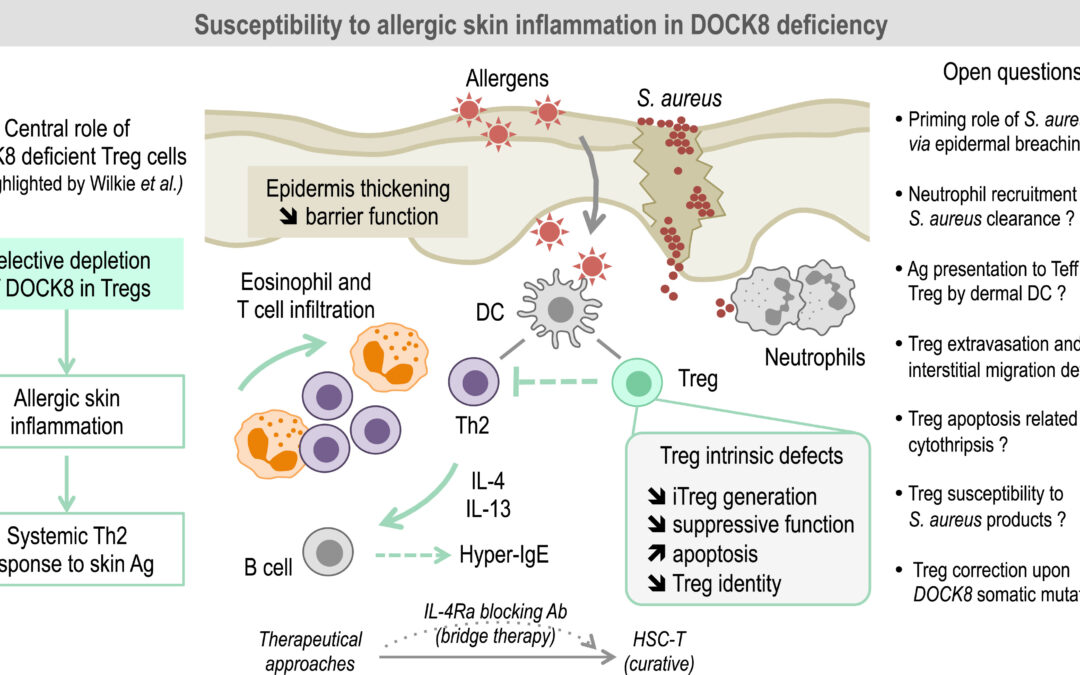
This same immune failure explains why other viral infections including herpes simplex, shingles, and HPV are often severe and persistent in DOCK8 patients. It also explains why doctors worry deeply about long-term cancer risk, as chronic viral infection and immune dysregulation are known contributors to malignancy.
For families, this means constant vigilance:
- Strict skin care routines
- Infection control measures
- Frequent medical visits
- Managing pain, itching, and secondary infections
Navigating the emotional toll of visible disease
When people see photographs or hear descriptions of severe molluscum, it can be shocking. But it is important to understand: this is not neglect, and it is not poor hygiene. It is the visible expression of a profoundly compromised immune system.
This is also why doctors view HSCT as urgent. Clearing molluscum and other viral infections is often one of the clearest signs of immune recovery after transplant because it means the body can finally do what it could not before.
-
Al-Herz et al. (DOCK8: persistent viral infections, immunology, HSCT cure). PMC
-
EBMT Handbook IEI chapter (infection susceptibility & transplant principles). NCBI
-
DOCK8 case literature reflecting severe viral disease and immune dysregulation (recent examples/case reports). Frontiers+1