Family Update #6

Family Update #6

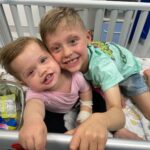
We want to share an important and transparent update on Sadie and Jesse’s medical journey as we enter the next phase. While Sadie and Jesse share the same diagnosis, their treatment pathways are now different.

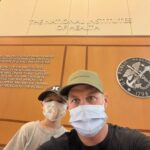
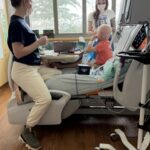
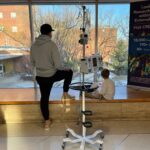
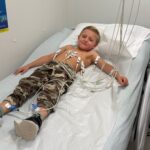
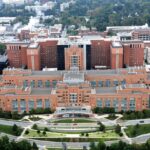
Jesse has been accepted into a specialised DOCK8 treatment programme with the National Institute of Health (NIH) in the United States following extensive medical review. As part of this programme, Jesse’s core transplant and treatment are being addressed within a clinical research framework. Jesse will travel to Washington DC with his parents in January 2026 to begin this phase of treatment and recovery, which is expected to take several months, subject to medical response and progress. There remain additional medical considerations outside of the NIH programme, including longer-term follow-up care, post-treatment needs once Jesse returns home, and certain procedures that are not covered within the research protocol. These aspects are still being evaluated in consultation with Jesse’s medical team.

Sadie is currently too young to qualify for the same programme. Her treatment pathway is still being actively pursued with international transplant centres, while she remains in South Africa under close medical supervision and maintenance treatment. Based on current medical input, Sadie’s transplant and associated care represent the largest remaining funding need, with initial estimates of approximately R8–R20 million, depending on clinical factors and complications.

When this campaign began, we were preparing for the possibility that both children would require fully self-funded international transplants, which is why earlier estimates were higher. As Jesse’s pathway has become clearer, the fundraising goal has been adjusted to reflect the remaining and anticipated medical needs, particularly for Sadie, as well as ongoing and unforeseen care for both children.

Stem cell transplantation is complex and high-risk, and costs and timelines can change. We remain committed to sharing updates responsibly as plans evolve. As Jesse and his parents travel to the US from 9 January, updates will be shared directly by the parents via the family’s Facebook page. From the bottom of our hearts, thank you to everyone who has supported, donated, prayed, and walked this journey with us.

The Latest Developments in DOCK8 Treatment

The Latest Developments in DOCK8 Treatment

If you’ve been following DOCK8 stories online, you’ll notice something interesting: families often speak in the language of “breakthroughs,” “new protocols,” and “new options.” And while it’s true that outcomes are improving, it’s equally important to stay grounded in what has not changed. The most important constant remains this: for DOCK8 deficiency, allogeneic hematopoietic stem cell transplantation (HSCT/HCT) is still the only known curative treatment. This is the current medical reality reflected in major clinical publications and international guidelines.

1) Better evidence, not just “hope”

For years, DOCK8 transplant evidence largely came from retrospective cohorts and single-centre experiences. Those matter, but the field is increasingly supported by stronger prospective data. A major recent milestone is the publication of results from a prospective clinical trial of hematopoietic cell transplantation for DOCK8 deficiency. Prospective trials are powerful because they track outcomes in a structured way, using predefined protocols and measurements, not just “what happened to patients we treated.” For donor communities and families, that matters because it increases confidence that:
  • approaches are becoming more standardized,
  • survival and immune reconstitution data are more reliable,
  • complications are being anticipated and managed more consistently.

2) More donor options — including “half-matched” strategies

A huge practical barrier for many families is donor availability. Historically, the ideal was a fully matched donor (often matched sibling or matched unrelated donor). But that’s not always possible fast enough, especially in rare diseases. In recent years, transplant centres have increasingly refined haploidentical (“half-matched”) donor transplants, often using strategies like post-transplant cyclophosphamide (PTCy) to reduce graft-versus-host disease (GVHD) risk. This has expanded access to transplant for patients who might otherwise wait too long for a perfect match. The literature on haploidentical approaches in DOCK8 is now part of the broader DOCK8/IEI transplant conversation. The key point for supporters: a donor “being found” does not make the journey easy. It can make the pathway possible, but HSCT remains complex, high-risk, and highly individualised.

3) Refining conditioning: aiming for “enough” without unnecessary toxicity

Conditioning refers to the chemotherapy (and sometimes immune antibodies) given before transplant to make space for donor stem cells and reduce rejection risk. In non-malignant diseases like DOCK8, the field has been moving toward conditioning regimens designed to balance:
  • engraftment success,
  • immune reconstitution,
  • and reduced long-term toxicity.
There is a large body of work on conditioning strategies for primary immunodeficiencies, including UK and European experience with agents like treosulfan/fludarabine in children with non-malignant disorders. This isn’t “one-size-fits-all,” but it represents a broader evolution toward safer, more tailored approaches.  

4) Using targeted therapies as “bridges” to transplant

Another development you’ll see more often now is the idea of bridging therapy: improving a child’s inflammatory burden, eczema, or infection control before HSCT so they enter transplant in the strongest possible condition. A relevant example in recent literature includes reports describing individualised pre-treatment strategies (including immune-modulating medications) before HSCT in DOCK8 patients, aimed at stabilising disease and improving readiness. This doesn’t replace transplant; it supports better transplant conditions.  

5) A clearer view of long-term outcomes and “what recovery really means”

Modern DOCK8 conversations are also more honest about the reality that transplant recovery is not instant. Immune rebuilding takes time. Viral clearance can be gradual. Some allergic features may persist for a period. But overall, the goal is profound: a functioning immune system and a life no longer defined by relentless infection risk. International guidance documents for inborn errors of immunity now emphasize structured long-term follow-up, infection prophylaxis, and revaccination planning post-HSCT — all part of what “successful treatment” truly entails.

The grounded conclusion

So yes: there are real developments: better evidence, improved donor strategies, refined conditioning, and smarter “bridge-to-transplant” care. But the core truth remains unchanged: DOCK8 is cured by rebuilding the immune system, and HSCT is still the route to that cure. And that’s why fundraising, planning, and careful preparation remain essential because even when the science improves, the journey is still serious, demanding, and deeply human.

References & Further Reading

Family Update #5

Family Update #5

To every single person who has supported our family, we want to say a heartfelt thank you. Over the past weeks, we have experienced a level of kindness, prayer, and generosity that is difficult to put into words. We are deeply grateful for every message, gesture, and contribution made in support of Sadie and Jesse. Behind the scenes, we continue to work closely with medical specialists and international centres to identify the safest and most appropriate treatment pathways for both children. Given the rarity and complexity of DOCK8 immunodeficiency, this process requires careful evaluation of centres and teams with direct experience in treating this condition. As part of this process, we have been in contact with the National Institutes of Health (NIH) in Washington, USA, and are engaged in ongoing discussions regarding Jesse’s potential eligibility for a specialised treatment programme. At this stage, these discussions are still under medical review, and no final decisions have been confirmed. Sadie is currently too young to qualify for the same programme, and we therefore continue to explore alternative international options for her with appropriate specialist teams. We remain prayerful and hopeful as doors continue to open, and we are committed to planning carefully and responsibly for the future of our precious children. Thank you for standing with us during this uncertain and challenging time. Your support means more to our family than we can ever express. With sincere gratitude, The Krause Family
Clinical Manifestations & the Lived Reality of DOCK8 Deficiency

Clinical Manifestations & the Lived Reality of DOCK8 Deficiency

DOCK8 deficiency is not a single-symptom condition. It is a progressive, multisystem immune disorder that affects nearly every aspect of a child’s physical resilience. What makes it particularly devastating is not only the severity of infections, but their persistence, resistance to treatment, and cumulative damage over time.

Recurrent & Severe Infections

Children with DOCK8 deficiency experience frequent, severe, and often unusual infections. These include:

  • Chronic viral skin infections (molluscum contagiosum, HPV warts, herpes viruses) that spread extensively and fail to resolve

  • Recurrent bacterial infections of the lungs, ears, and sinuses

  • Fungal infections that are difficult to eradicate

  • Infections that return quickly after antibiotics, reflecting impaired immune memory

NIH clinicians have documented that DOCK8-deficient immune cells struggle to migrate through dense tissues like skin and lungs, leaving these areas particularly vulnerable.

Severe Eczema, Allergies & Immune Dysregulation

Almost all patients present with severe eczema early in life, often mistaken initially for standard atopic dermatitis. Over time, this becomes complicated by:

  • Extremely high IgE levels

  • Food allergies (sometimes life-threatening)

  • Asthma and allergic airway disease

  • Chronic inflammation that damages skin and tissue barriers

This constant inflammatory state contributes to infections becoming entrenched, rather than episodic.


Antibiotic Resistance & Escalating Care

One of the most distressing aspects for families is that infections often become resistant to standard antibiotics and antivirals. Over time:

  • Children require longer, stronger, or combination treatments

  • Hospital admissions become more frequent

  • Infections spread faster and heal more slowly

This pattern is well-described in NIH case series and is one of the reasons early definitive treatment is critical.

Long-Term Risks Without Definitive Treatment

Without curative intervention, DOCK8 deficiency carries serious long-term risks:

  • Permanent lung damage (bronchiectasis)

  • Chronic viral infections that can lead to virus-associated cancers

  • Failure to thrive due to constant illness

  • Reduced life expectancy

NIH research consistently shows that outcomes are significantly better when children receive hematopoietic stem cell transplantation (HSCT) before irreversible organ damage occurs.

The Human Reality Behind the Diagnosis

Beyond the clinical descriptions lies a daily reality that is difficult to quantify:

  • Constant infection control and isolation

  • Limited exposure to normal childhood environments

  • Repeated hospitalisations and procedures

  • Parents living in ongoing crisis mode, balancing hope with uncertainty

NIH clinicians often emphasise that DOCK8 deficiency is medically complex but emotionally relentless — not only for the child, but for the entire family.

Why Early, Specialised Care Matters

Because DOCK8 deficiency is rare, many children experience delays in diagnosis or fragmented care. NIH-led programmes and international transplant centres play a crucial role in:

  • Confirming diagnosis through advanced genetic testing

  • Managing infections aggressively while preparing for transplant

  • Determining the safest timing and approach for HSCT

This specialised oversight can be life-saving.

Why Costs Are Unpredictable in DOCK8 and Stem Cell Transplantation

Why Costs Are Unpredictable in DOCK8 and Stem Cell Transplantation

Families facing HSCT often ask why cost estimates vary so widely. The answer is that transplant is a process, not an event. Costs are influenced by:
  • Length of hospitalisation
  • Infections or complications
  • ICU admissions
  • GVHD treatment
  • Medications and immune support
  • Duration of isolation
  • Speed of immune recovery
Two children undergoing the same procedure at the same centre can have vastly different courses. In DOCK8 patients, pre-existing viral disease, including severe molluscum can increase complexity, prolong recovery, and add cost. This is why experienced centres plan for contingencies and why fundraising targets include buffers for unforeseen needs. This is not about expecting the worst, but about planning carefully because preparation gives children the best possible chance.
  • EBMT/ESID IEI HSCT guidelines (complications and variables affecting course). EBMT+1

  • Conditioning regimens review in PID (why intensity/approach varies; effects on outcomes). PMC

  • NHS England commissioning policy for allo-HSCT in primary immunodeficiencies (HSCT is high-cost, specialised; risks/morbidity). NHS England

Raising Awareness for DOCK8 – Media with IOL

Raising Awareness for DOCK8 – Media with IOL

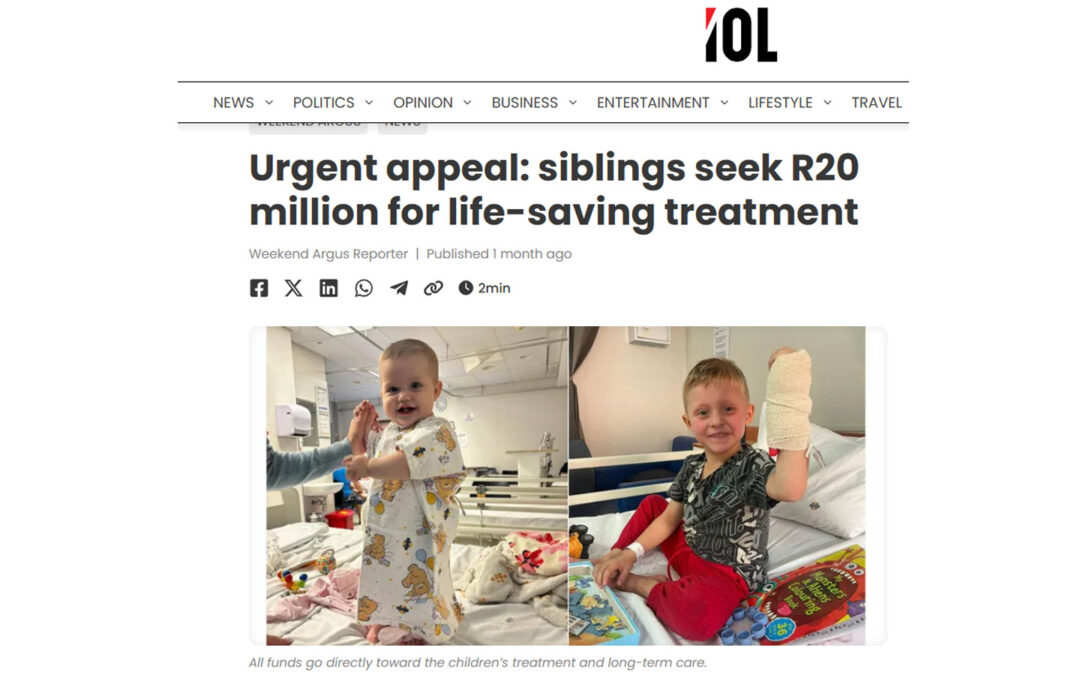
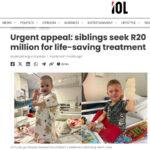
In rare disease journeys, awareness is about understanding. We’re sharing a recent article published by Independent Online that helps explain the reality facing Jesse and Sadie.

You can read the article here:
https://iol.co.za/weekend-argus/news/2025-11-26-urgent-appeal-siblings-seek-r20-million-for-life-saving-treatment/

While every family’s story is deeply personal, sharing it publicly serves a broader purpose: helping people understand why DOCK8 is so serious, why treatment decisions are complex, and why long-term support is essential.